
Table of Contents
Are online yoga classes effective for beginners?
The Digital Mat: Can You Really Learn Yoga Online?
The question “Are online yoga classes effective for beginners?” has become the starting point for thousands of wellness journeys in 2026. For many in Chennai, from the busy streets of T. Nagar to the quiet corners of Adyar, the idea of starting yoga can be intimidating. The traditional image of a flexible practitioner in a crowded studio often feels out of reach.
The short answer is a resounding yes. Online yoga classes are not only effective but can often be the most sustainable way for a beginner to build a foundation. Effectiveness, however, depends on the “how.” It isn’t just about watching a video; it’s about the quality of instruction, the interactivity of the platform, and the consistency of the practitioner.
In this guide, we will peel back the layers of virtual wellness. We’ll look at why the digital shift is helping beginners overcome “gym-timidation,” how to ensure you are practicing safely without a physical teacher in the room, and why a screen can actually be a bridge to a deeper, more personal connection with your body.
What are Online Yoga Classes?
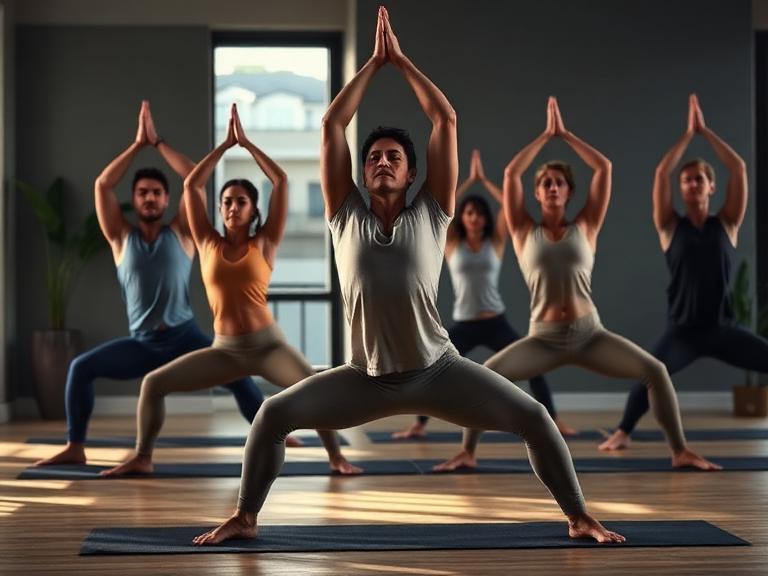
Online yoga classes are virtual instructional sessions delivered via live-streaming platforms (like Zoom or Google Meet) or pre-recorded video libraries. They allow practitioners to follow guided sequences, breathing exercises, and meditation from home, using digital devices to connect with certified instructors across the globe.
Why Online Yoga Matters for Modern Wellness
In our fast-paced urban lives, time and stress are the two biggest hurdles to health. In Chennai, navigating traffic on Mount Road just to attend a 60-minute class can often negate the stress-relief benefits of the practice itself.
Online yoga removes these logistical barriers. It democratizes wellness, making high-quality instruction from world-class teachers accessible to someone in a small apartment in Velachery or a villa on ECR. For a beginner, this accessibility is the difference between “I’ll start someday” and “I’m starting today.”
Beyond convenience, online yoga allows for a personalized environment. You control the lighting, the temperature, and the music. This level of comfort is crucial for a beginner who needs to focus internally rather than worrying about who is watching them in a studio mirror.
How Online Yoga Works: The Step-by-Step Transition
Starting your journey requires more than just an internet connection. To make online yoga effective, you need to set up a “Virtual Shala” that mimics the focus of a physical studio.
- Selection of Format: You choose between Live Interactive sessions (where the teacher sees you via camera and gives real-time corrections) or On-Demand videos (self-paced learning).
- Environment Setup: You designate a quiet 6×4 foot space. This physical boundary signals to your brain that it is time to transition from “work mode” to “wellness mode.”
- Digital Connection: You use a laptop, tablet, or smart TV. Ideally, the screen is at eye level so you don’t strain your neck during poses.
- The Feedback Loop: In live classes, the instructor provides verbal adjustments (e.g., “Karthik, tuck your tailbone slightly”). In recorded classes, you rely on detailed anatomical cues provided by the teacher.
The Benefits of Virtual Practice for Beginners
Physical Benefits
- Safe Progression: Beginner-specific online tracks focus on “Foundations,” allowing you to build strength in the core and joints before attempting complex inversions.
- Increased Consistency: When the “commute” is only ten steps to your living room, you are 60% more likely to stick to a daily routine.
- Pace Control: In recorded sessions, you can pause, rewind, and re-watch a specific transition until you grasp the alignment.
Mental and Emotional Benefits
- Reduced Anxiety: Many beginners feel self-conscious. Practicing at home eliminates “social comparison,” allowing you to focus entirely on your breath.
- Autonomy: You learn to listen to your body’s signals rather than trying to keep up with the most advanced person in a physical room.
- Lower Cortisol: By removing the stress of travel and scheduling, the parasympathetic nervous system (rest and digest) activates more quickly.
How Beginners Should Approach Online Yoga
If you are unrolling your mat for the first time in front of a screen, follow this “Beginner’s Compass”:
Start with Live Interaction: If possible, choose a live class for your first month. Having a teacher call your name and correct your posture virtually is vital for preventing injuries.
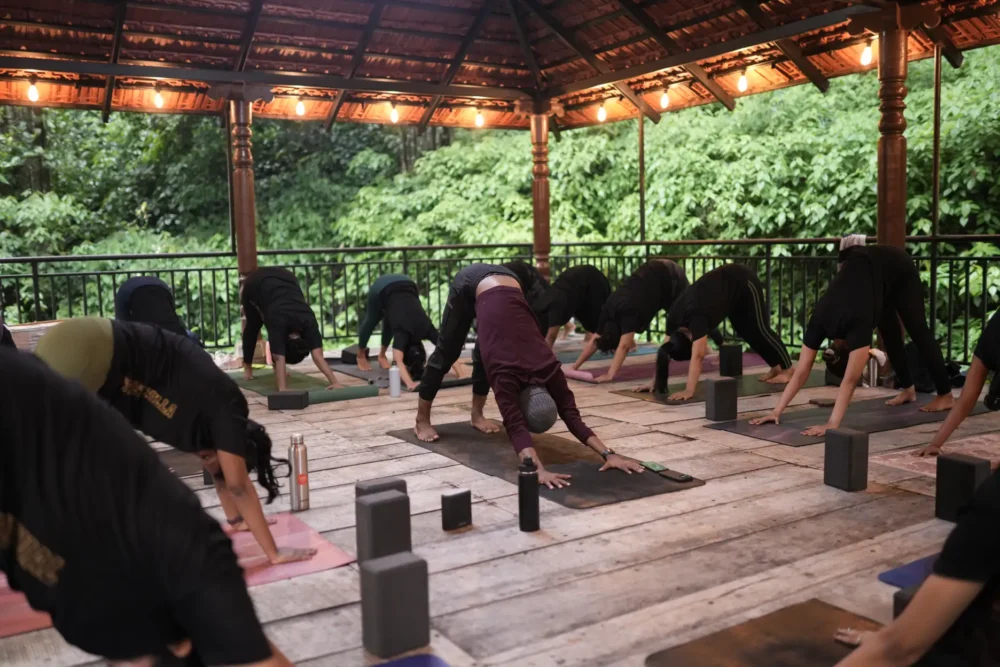
Focus on Hatha or Iyengar: These styles are slower and emphasize alignment. Avoid “Power Yoga” or “Fast Vinyasa” until you understand the basic geometry of poses like Adho Mukha Svanasana (Downward Dog).
Invest in Props: Don’t skip the equipment. A pair of yoga blocks and a sturdy cotton strap are your best friends. They “bring the floor to you,” ensuring you don’t overstretch while your flexibility is still developing.
Common Misunderstandings About Virtual Yoga
“I won’t get the alignment right without a physical touch.”
While physical adjustments are helpful, verbal cues are often more educational. Learning to move your body based on an instructor’s description builds a stronger mind-muscle connection.
“Online yoga is just for stretching.”
In reality, a well-structured beginner’s online flow involves isometric strength building, balance training, and respiratory conditioning that can be quite physically demanding.
“It’s not ‘real’ yoga if it’s on a screen.”
Yoga is defined by the union of breath and movement. Whether that guidance comes from a person standing three feet away or three thousand miles away, the internal experience remains authentic.
Real-World Scenario: The OMR Corporate Shift
Meet Rajesh. A 38-year-old developer in Chennai. He suffered from “Tech-Neck” and chronic lower back pain. He was too shy to join a local studio. He signed up for a Beginner Live Online Batch. Because the teacher could see him, she noticed he was “collapsing” his lower back in lunges. With virtual corrections, Rajesh learned to engage his core. Six months later, his back pain is gone, and he practices daily at 6:00 AM before his login.
Real-World Scenario: The Stay-at-Home Mother in Adyar
Meet Priya. With a toddler at home, leaving for a 90-minute studio session was impossible. She used an On-Demand Yoga Library. She practiced for just 20 minutes during her child’s nap time. The “effectiveness” wasn’t in doing a perfect headstand; it was in the 20 minutes of mental silence she gained, which helped her manage her daily stress with more grace.
Practical Tips for Your First Virtual Session
- Camera Placement: Place your camera 6–8 feet away from your mat, positioned at a side profile. This allows the teacher to see the alignment of your spine and knees.
- Lighting: Ensure the light source is in front of you, not behind you. If you are backlit, the teacher will only see a silhouette and won’t be able to correct your form.
- Audio: Use wireless earbuds if your environment is noisy. Hearing the teacher’s breath and cues clearly is 50% of the practice.
- Clothing: Wear form-fitting (but comfortable) clothes. Baggy t-shirts can hide your alignment, making it hard for a virtual instructor to help you.
Frequently Asked Questions (FAQs)
1. Can online yoga cause injuries for beginners? Any physical activity carries risk. However, injuries are easily avoided by choosing “Beginner-Foundation” levels, using props, and never pushing into sharp pain.
2. How many times a week should a beginner do online yoga? Consistency beats intensity. Start with 3 sessions a week, roughly 20–30 minutes each. This allows your connective tissues to adapt without becoming over-sore.
3. Do I need a high-speed internet connection? A stable connection is important for live classes to avoid “lag.” For recorded videos, you can often download sessions in advance if your internet is spotty.
4. Can I lose weight with online yoga? Yes. While yoga is holistic, dynamic styles increase your heart rate and build lean muscle mass, which boosts your metabolic rate over time.
5. What is the best time for a beginner to practice at home? Early morning (on an empty stomach) is traditional and helps set a calm tone for the day. However, the “best” time is the one you can commit to every single day.
6. Is it okay to do yoga on a carpet? A firm, flat surface is best. If practicing on a carpet, place your yoga mat on top of it, but be careful of “sliding.” A hard floor provides better stability for balance poses.
7. How do I know if an online teacher is qualified? Look for “RYT-200” or “RYT-500” certifications (Registered Yoga Teacher) or graduates from established Indian institutions like Krishnamacharya Yoga Mandiram or Kaivalyadhama.
8. Is virtual yoga as good as a physical studio? It is different. You trade “hands-on adjustment” for “convenience and privacy.” For most beginners in 2026, the benefits of privacy and consistency outweigh the lack of physical touch.
A Gentle Conclusion
Effectiveness is not a destination you reach; it is a quality you bring to each breath. Online yoga classes are an incredible tool for beginners because they remove the “theatre” of fitness and return the focus to the self.
As you start your journey in Chennai or anywhere else in the world, remember that the most advanced yogi in the room is the one having the most fun and breathing the deepest. Your screen is just a window; the real transformation happens within your own four walls.
Would you like me to help you design a 15-minute “Desk Yoga” routine for your work-from-home breaks?




Leave a Comment