
Table of Contents
Engineering Protocols for Multi-Beam Detectors: Lift Door Sensor Repair Hitech City
Maintaining the operational integrity of elevator door systems in high-density IT parks and high-rise commercial environments requires specialized electro-optical expertise. Across Hitech City, Hyderabad—including major tech developments like Madhapur, Mindspace, Kondapur, and the Financial District corridor—passenger elevators experience high duty cycles. Because elevator doors cycle at every floor landing, they face continuous physical and electronic wear.
Statistics from field service networks indicate that over 70% of unplanned elevator shutdowns originate within the passenger entrance door protection sub-systems. When a lift door fails to close, bounces repeatedly, or enters a slow “nudge” safety speed, vertical transit across the property stalls.
For property managers, corporate facilities engineers, and residential housing committees, securing professional lift door sensor repair hitech city is essential to minimize down-time, ensure passenger safety, and comply with state lift regulations.
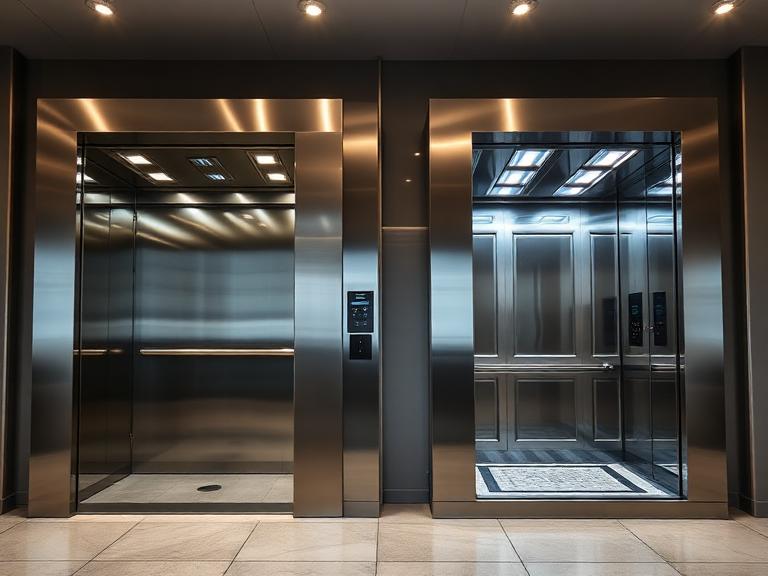
1. Anatomy of Modern Lift Door Sensor Systems
To troubleshoot and fix door sensor faults effectively, technicians must analyze both older mechanical safety edges and modern optoelectronic light curtains.
A. Non-Contact Infrared (IR) Light Curtains
Modern premium commercial elevators use non-contact infrared light curtains. These devices feature an optical transmitter and receiver pair mounted on the leading edges of the car doors.
- Transmitter Strips: Contain an array of infrared light-emitting diodes (LEDs) that project a dense grid of invisible light beams across the entrance.
- Receiver Strips: Contain corresponding photodiode detectors that continuously monitor the incoming light beams.
- The Logic Controller: A dedicated microprocessor controls the array. If a passenger or object breaks even one light beam, the controller sends an instantaneous signal to the main cabin door operator panel to reverse direction without making physical contact.
B. Mechanical Safety Edges (Legacy Systems)
Older residential standalone units in parts of Hitech City still use mechanical safety edges. These systems rely on a flexible rubber-profile bumper bar linked to a internal microswitch. When the bumper encounters an obstacle, it physically compresses, opening a low-voltage electrical contact that signals the door motor to reverse.
2. Common Root Causes of Sensor Failures in Hitech City
Hitech City’s unique climate and high building occupancy levels introduce specific operational stresses that can cause lift door sensors to malfunction.
1. Environmental Dust and Micro-Particulate Intrusion
Ongoing construction, road widening, and office renovations across the Hitech City zone generate significant micro-dust. This particulate matter settles inside the elevator doors’ lower sill tracks and on the optical lenses of the light curtains.
When dust blocks the IR lenses, the receiver strip interprets the obscured signal as a permanent obstruction, causing the doors to remain open or slide back and forth repeatedly.
2. High-Frequency Mechanical Vibrations and Misalignment
Lifts in busy IT blocks cycle thousands of times each day. These high duty cycles subject the door panels to continuous vibrations, which can cause the transmitter and receiver strips to drift out of alignment.
If the horizontal alignment varies by more than a few millimeters, the light beams miss their targets on the receiver strip, causing the system to trigger an automatic safety reversal.
3. Electrical Stress and Traveling Cable Fatigue
The electrical signals from the light curtain flow through a dedicated flexible traveling cable connected to the main elevator car top controller. Because this cable bends and straightens with every single door movement, the internal copper wires can develop micro-fractures over time. This wear leads to intermittent sensor drops that can be difficult to diagnose without specialized diagnostic loop testers.
3. Step-by-Step Sensor Repair and Calibration Protocol
Resolving a persistent door sensor fault requires a systematic engineering approach to locate the root cause and ensure long-term reliability.
1.Computational Diagnostic Fault Isolation:Phase I.
The service technician connects a handheld diagnostic tool to the elevator controller or logs into the door operator’s on-board microprocessor. They read the active error codes to determine if the issue stems from an optical blockage, a communication loss, or a low-voltage power supply drop.
2.Optical Lens Rehabilitation and Mechanical Realignment:Phase II.
Technicians isolate the elevator power using strict lockout-tagout procedures. They clean the lenses with specialized antistatic fluids, clear any debris out of the lower sill tracks, and adjust the structural mounting brackets to restore perfect alignment between the transmitter and receiver strips.
3.Traveling Cable Integrity and Voltage Stabilization Checks:Phase III.
The engineering team measures the incoming DC voltage at the sensor terminal block to ensure it meets the standard $24\text{V DC}$ requirement. They also test the traveling cable lines for continuity to rule out any intermittent electrical drops.
4.Replacing Damaged Light Curtain Hardware (If Required):Phase IV.
If the light curtain’s internal diodes are degraded or damaged, technicians replace the entire strip assembly with a new, certified unit. They ground the new hardware properly to protect it from electrical noise and voltage spikes.
5.Dynamic Recalibration and Safety Compliance Testing:Phase V.
Power is restored, and the door controller undergoes a full calibration sequence. Technicians test the system by placing obstacles of various sizes at different heights to ensure the doors reverse safely and meet all local safety codes.
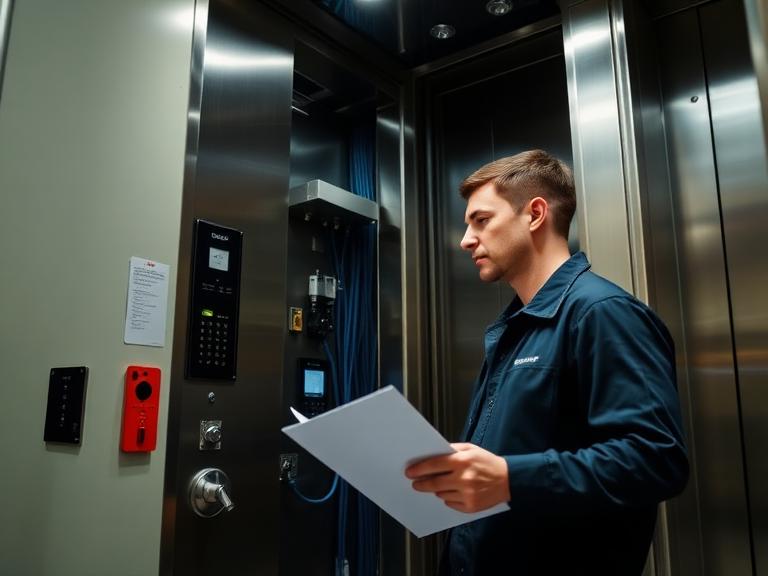
4. Key Performance Indicators: When to Repair vs. Replace
When a door sensor begins acting up, property managers must decide whether to attempt a component repair or invest in a full system replacement.
Evaluation Decision Matrix
| Operational Symptom | Probable Subsystem Root Cause | Recommended Action | Estimated Technical Turnaround Time |
| Intermittent door reversal during high midday temperatures. | Thermal degradation of internal capacitors within the sensor power supply module. | Replace the power module and upgrade machine room ventilation. | 2 to 3 Hours |
| Doors remain fully open; controller error display reads “Photodiode Blinding.” | Dust accumulation on the lenses or severe physical misalignment of the sensor strips. | Deep clean the optical profiles and realign the structural mounting brackets. | 1 to 2 Hours |
| Doors bounce open repeatedly at a specific point along the track. | Flex fatigue or micro-fractures inside the flexible traveling cable. | Replace the traveling cable with a high-flexibility silicone line. | 3 to 4 Hours |
| Doors enter a slow “nudge” mode with a continuous warning buzzer. | Multiple internal IR diode failures inside the transmitter strip. | Remove the old hardware and retrofit a new multi-beam safety light curtain. | 2 to 4 Hours |
5. Regulatory Compliance Under the National Building Code 2016
Modernizing or repairing elevator door sensors is subject to strict local safety codes and national regulations.
Statutory Safety Mandates
- Mandatory Non-Contact Sensing: The National Building Code (NBC) of India 2016 mandates that high-traffic passenger lifts must include non-contact electronic safety sensors. Older mechanical safety edges should be updated during modernization to reduce passenger injury risks.
- Door Closing Force Constraints: Under IS 14665 guidelines, the kinetic energy of an automatic sliding door must be tightly controlled. If the electronic sensors fail, the mechanical force must not exceed $150\text{ N}$ to prevent injury to passengers.
- Nudging Mode Parameters: Modern safety regulations state that if an obstruction blocks the door sensors for an extended period (typically more than 20–30 seconds), the system can enter a restricted “nudging” mode. The elevator will sound a warning buzzer and slowly close the doors at reduced speed to maintain building traffic flow.
6. Proactive Procurement: Choosing the Right Service Provider
To ensure high-quality repairs and reliable operation, facility managers should screen local service providers using clear technical criteria.
Service Center Checklist
- Verify Licensing Credentials: Ensure the service center holds a valid Class-A Electrical Contractor License from the Telangana State Electrical Inspectorate.
- Insist on Open-Protocol Hardware: Choose non-proprietary light curtains (such as universal models from Janus, WECO, or Cedar) that can be easily adjusted or serviced by any qualified technician in the future.
- Confirm Local Parts Inventory: Verify that the service center maintains a dedicated parts depot within the Hitech City zone to ensure fast access to replacement sensors and cables.
- Review Warranty Commitments: A professional sensor replacement or repair should include a comprehensive warranty period of 12 to 24 months covering all parts and labor.

7. Frequently Asked Questions (FAQs)
Q1: Why do our building’s lift doors bounce open repeatedly even when no one is entering?
A: This behavior is usually caused by an interrupted safety signal. The most common culprits are dust or direct sunlight blinding the infrared sensor lenses, loose mounting brackets causing the strips to vibrate out of alignment, or micro-fractures inside the traveling cable that break connection as the doors move.
Q2: How long does it typically take to replace a damaged elevator light curtain?
A: A standard on-site replacement for a multi-beam light curtain takes between 2 to 4 hours. This timeframe includes safely isolating the elevator power, removing the old sensor strips, running new traveling cables, installing the new hardware, and performing full safety calibration tests.
Q3: Can an older lift with manual accordion or swing doors be upgraded with electronic sensors?
A: No, electronic light curtains require automatic sliding doors to function correctly. To add modern electronic safety sensors to a manual lift, the system must undergo a mechanical door conversion to replace the manual gates with an automated sliding door operator system.
Q4: Why do elevator doors sometimes close very slowly while sounding a continuous buzzer?
A: This is an automated safety feature known as “nudge mode.” If an object blocks the infrared sensors for an extended period, the controller concludes that the sensor is either blocked or malfunctioning. To prevent the lift from getting stuck indefinitely, it sounds a warning buzzer and slowly closes the doors at reduced force to keep the system operational.
Q5: Is it safe to clean the elevator door sensors ourselves with standard building cleaners?
A: No. Standard industrial glass cleaners or harsh chemical solvents can cloud or damage the specialized plastic lenses of infrared light curtains. Lenses should only be wiped down gently using a clean, dry microfiber cloth or specialized antistatic electronic cleaners after isolating the lift’s power.


Leave a Comment