
Table of Contents
Top EV Charging Contractors in Hyderabad | HT/LT Grid, CPO & Depot Setup
The acceleration of electric vehicle adoption across Greater Hyderabad—spanning passenger vehicles in HITEC City and Jubilee Hills, corporate employee shuttle fleets in Gachibowli, e-buses operated by TGSRTC, and logistics fleets along the Outer Ring Road (ORR)—has created demand for high-capacity power infrastructure. However, deploying electric vehicle supply equipment (EVSE) requires specialized engineering.
A charger is only as reliable as the underlying electrical supply and civil infrastructure that powers it. Installing a 60kW, 120kW, or 240kW+ Direct Current (DC) fast-charging plaza or a multi-port Alternating Current (AC) wallbox hub requires specialized EV charging contractors in Hyderabad.
Licensed A-grade electrical and civil contractors bridge the gap between utility distribution grids operated by TGSPDCL (Telangana Southern Power Distribution Company Limited) and EVSE hardware. This manual details the technical standards, regulatory workflows, engineering calculations, and execution sequences carried out by leading EV charging contractors across the Hyderabad Metropolitan Development Authority (HMDA) jurisdiction.
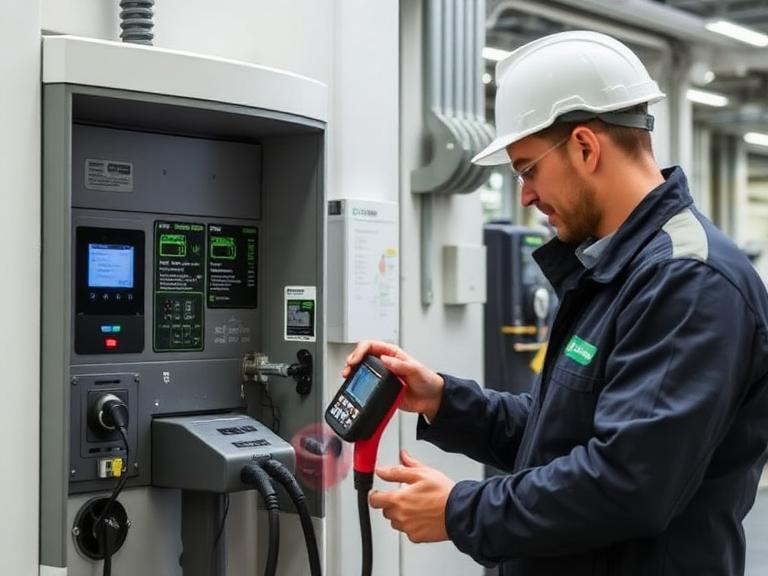
1. Scope of Work & Core Competencies of A-Grade EV Contractors
General building electrical contractors often lack the specialized training needed to handle high-power continuous loads, complex harmonics, and strict safety guidelines mandated for electric vehicle charging infrastructure.
┌─────────────────────────────────────────────────────────────────────────────┐
│                 CONTRACTOR COMPETENCY & TECHNICAL CAPABILITIES              │
├──────────────────────┬──────────────────────────┬───────────────────────────┤
│ Contracting Domain   │ Core Technical Activity  │ Engineering Deliverable   │
├──────────────────────┼──────────────────────────┼───────────────────────────┤
│ Grid Interconnection │ TGSPDCL Application &    │ LT-IX / HT-IX Service     │
│ & Utility Liaison    │ Load Sanction Processing │ Meter & Approved SLD      │
├──────────────────────┼──────────────────────────┼───────────────────────────┤
│ High-Voltage Power   │ 11kV/33kV Substation,    │ Step-Down Transformer     │
│ Infrastructure       │ Step-Down Transformer    │ & HT Breaker Panel        │
├──────────────────────┼──────────────────────────┼───────────────────────────┤
│ Low-Voltage Power    │ Main LT Panel Build,     │ Busbar Distribution Panel │
│ Distribution         │ Armor Cabling, Switchgear│ with Class II SPDs & RCDs │
├──────────────────────┼──────────────────────────┼───────────────────────────┤
│ Grounding & Safety   │ Chemical Earth Pits,     │ Dedicated Earthing Grid   │
│ Engineering          │ Equipotential Bonding    │ (Ground Impedance < 5.0 Ω)│
├──────────────────────┼──────────────────────────┼───────────────────────────┤
│ Civil & Structural   │ Concrete Plinths, Trench,│ Reinforced M30 Base Pad,  │
│ Execution            │ Bollards, Canopy Roofing │ Troughs & Protective Cages│
└──────────────────────┴──────────────────────────┴───────────────────────────┘
Statutory Licensing Requirements in Telangana
To execute commercial EV charging projects legally within Telangana, contracting firms must hold specific state licenses:
- Class-A Electrical Contractor License: Issued by the Telangana State Electricity Licensing Board (TSELB), authorizing execution of high-voltage (11kV/33kV) and low-voltage electrical installations.
- TSREDCO Empanelment Certificate: Certification as an approved installer for public and commercial renewable/clean-tech energy projects across the state.
- Certified HT Cable Jointers & Engineers: On-site supervisors holding valid Wireman and Supervisor Competency Certificates issued by the TSELB.
2. Utility Engineering: TGSPDCL Load Sanctions & Transformer Sizing
Connecting a commercial EV charging station to the city’s power grid requires formal utility approvals and accurate electrical load calculations.
┌─────────────────────────────────────────────────────────────────────────────┐
│                  TGSPDCL UTILITY LOAD SANCTION WORKFLOW                     │
├─────────────────────────────────────────────────────────────────────────────┤
│  Step 1: Electrical Load Audit & Diversity Factor Calculation               │
│     │                                                                       │
│     v                                                                       │
│  Step 2: Submission of Single-Line Diagram (SLD) to TGSPDCL Circle Office    │
│     │                                                                       │
│     v                                                                       │
│  Step 3: Field Feasibility Inspection by TGSPDCL Assistant Engineer (ADE)   │
│     │                                                                       │
│     v                                                                       │
│  Step 4: Issuance of Demand Note & Concessional Tariff (LT-IX / HT-IX)      │
│     │                                                                       │
│     v                                                                       │
│  Step 5: Substation Erection, Meter Installation & Grid Synchronization     │
└─────────────────────────────────────────────────────────────────────────────┘
Transformer Capacity Sizing Formula
To determine the required step-down transformer kVA rating for a commercial fast-charging plaza, contractors apply the following calculation:
$$S_{\text{transformer}} = \frac{P_{\text{total}}}{\eta_{\text{charger}} \times \text{PF}} \times \text{SF}$$
Where:
- $P_{\text{total}}$ = Total connected DC fast charger power output in kW.
- $\eta_{\text{charger}}$ = Power conversion efficiency of the AC/DC rectifier ($\approx 0.94$).
- $\text{PF}$ = Power Factor ($\approx 0.98$ for modern active PFC rectifiers).
- $\text{SF}$ = Safety & Expansion Factor ($\approx 1.20$, accounting for continuous load rules and auxiliary loads).
Sample Calculation for a 180kW DC Fast Charging Site:
For a plaza operating three 60kW dual-gun DC chargers ($P_{\text{total}} = 180\text{ kW}$):
$$S_{\text{transformer}} = \frac{180\text{ kW}}{0.94 \times 0.98} \times 1.20 = \frac{180}{0.9212} \times 1.20 \approx 195.4\text{ kVA} \times 1.20 \approx 234.5\text{ kVA}$$
Contractors select the nearest standard oil-cooled outdoor transformer rating: 250 kVA 11kV/415V step-down transformer.
3. Technical Standards, CEA Safety Compliance & Chemical Earthing
Electric vehicle charging infrastructure must comply with the Central Electricity Authority (Measures relating to Safety and Electric Supply) Regulations.
┌─────────────────────────────────────────────────────────────────────────────┐
│                 CEA ELECTRICAL SAFETY COMPLIANCE MATRIX                     │
├───────────────────────────┬───────────────────────────┬─────────────────────┤
│ Safety Parameter          │ CEA Statutory Mandate     │ Engineering Check   │
├───────────────────────────┼───────────────────────────┼─────────────────────┤
│ Ground Loop Impedance     │ $R_{\text{earth}} < 5.0\ \Omega$ │ Fall-of-potential   │
│                           │ (Fast Plazas: $< 1.0\ \Omega$)│ earth pit testing   │
├───────────────────────────┼───────────────────────────┼─────────────────────┤
│ Neutral-to-Earth Voltage  │ $V_{\text{N-E}} < 3.0\text{V AC}$│ Multimeter testing  │
│                           │                           │ under full 32A load │
├───────────────────────────┼───────────────────────────┼─────────────────────┤
│ Residual Current Leakage  │ $\le 30\text{mA}$ Trip;   │ Calibrated RCD      │
│ Protection                │ Type B / AC-DC Sensitive  │ injection testing   │
├───────────────────────────┼───────────────────────────┼─────────────────────┤
│ Insulation Resistance     │ $R_{\text{insulation}} > 100\text{ M}\Omega$│ 1000V DC megohmmeter│
│                           │                           │ testing across buses│
├───────────────────────────┼───────────────────────────┼─────────────────────┤
│ Continuous Circuit Sizing │ $125\%$ of Rated Current  │ Verify breaker/cable│
│ (NEC / CEA Rule)          │ ($32\text{A} \times 1.25 = 40\text{A}$)│ continuous ratings  │
└───────────────────────────┴───────────────────────────┴─────────────────────┘
Chemical Earthing System Installation
Contractors install maintenance-free chemical pipe earthing systems to ensure low ground impedance throughout the year:
- Borehole Drilling: Drill a 150mm diameter borehole to a depth of 2.5 to 3.0 meters.
- Electrode Insertion: Insert a 50mm diameter copper-bonded steel pipe (minimum 250-micron copper coating thickness).
- Conductive Backfill: Fill the surrounding annular space with a highly conductive, moisture-retaining chemical compound (bentonite or marconite) that maintains low soil resistivity even during dry summer months.
- Inspection Pit: Install a heavy-duty concrete inspection chamber with a removable cover for periodic earth resistance testing.
┌─────────────────────────────────────────────────────────────────────────────┐
│                 CHEMICAL PIPE EARTH PIT CROSS-SECTION                       │
├─────────────────────────────────────────────────────────────────────────────┤
│  [ Concrete Inspection Pit Cover ]                                          │
│     │                                                                       │
│     ├── Removable Testing Busbar Link (Copper Strip)                       │
│     │                                                                       │
│  [ 150mm Borehole filled with Conductive Bentonite Compound ]               │
│     │                                                                       │
│     └── 50mm x 3000mm Copper-Bonded Steel Electrode (250-Micron Coating)   │
└─────────────────────────────────────────────────────────────────────────────┘
4. Property-Specific Execution Strategies Across Hyderabad Micro-Markets
Different installation environments present unique structural, civil, and electrical challenges.
┌─────────────────────────────────────────────────────────────────────────────┐
│                  PROPERTY SECTOR EXECUTION MATRIX                           │
├─────────────────────┬──────────────────────────┬────────────────────────────┤
│ Property Sector     │ Primary Execution Focus  │ Contractor Technical Scope │
├─────────────────────┼──────────────────────────┼────────────────────────────┤
│ Multi-Family RWAs   │ Basement safety, fire    │ LSZH armored cabling on GI │
│ (Gachibowli,        │ retardant conduit, load  │ trays; Dynamic Load        │
│ Kondapur, Uppal)    │ balancing on main panel  │ Sharing CT installation    │
├─────────────────────┼──────────────────────────┼────────────────────────────┤
│ Corporate IT Parks  │ Heavy daily utilization, │ Substation upgrades, dual-  │
│ (HITEC City,        │ off-peak charging schedules,│ gun DCFC plinths, high-gain│
│ Financial District) │ aesthetic cable management│ 4G Yagi antennas           │
├─────────────────────┼──────────────────────────┼────────────────────────────┤
│ Highway Corridors   │ High power throughput,   │ Dedicated 315 kVA HT       │
│ (ORR Interchanges,  │ civil weather protection,│ transformer, solar canopy, │
│ NH-44, NH-65)       │ heavy vehicular traffic  │ protective steel bollards  │
├─────────────────────┼──────────────────────────┼────────────────────────────┤
│ Commercial Retail & │ Fast driver turnaround,  │ Elevated M30 plinths,      │
│ Malls (Banjara      │ high visual visibility,  │ illuminated canopy roofs,  │
│ Hills, Kukatpally)  │ payment POS integration  │ anti-skid floor markings   │
└─────────────────────┴──────────────────────────┴────────────────────────────┘
5. Step-by-Step Contracting & Installation Sequence
Executing a commercial EV charging contract involves a structured civil and electrical installation process:
1.Site Survey, Load Audit & SLD Preparation:Phase 1: Site Audit & Engineering Design.
Contractors inspect site switchgear, evaluate available transformer kVA capacity, measure soil resistivity, conduct 3D shadow analysis for solar placement, and draft detailed As-Built Single-Line Diagrams (SLDs).
2.TGSPDCL Load Sanction & TSREDCO Filing:Phase 2: Utility & Regulatory Clearances.
Submit formal service connection applications to TGSPDCL under LT-IX or HT-IX tariff categories. Secure approval for transformer installation or line extensions and file site plans with TSREDCO.
3.Concrete Plinth Casting & Cable Troughs:Phase 3: Civil Construction & Trenching.
Excavate cable trenches, lay concrete cable troughs with brick covers, pour reinforced M30 concrete mounting plinths elevated 200mm above grade, and install steel protective bollards.
4.Substation, Transformer & LT Panel Erection:Phase 4: High-Voltage & Distribution Setup.
Erect the outdoor step-down transformer (e.g., 100 kVA – 315 kVA), install HT VCB breakers, mount the main LT busbar distribution panel, fit Class II SPDs, Type B RCD switches, and TOD utility meters.
5.Chemical Earth Pits & Armor Cable Termination:Phase 5: Earthing & Cabling Installation.
Drill boreholes and install chemical pipe earth pits (< 5.0 Ω). Lay XLPE armored copper/aluminum cables on GI ladder trays, perform glanding and crimping, and connect dual earth bonds.
6.CEA Safety Inspection & Grid Synchronization:Phase 6: Inspection & Commissioning.
Conduct insulation resistance testing (1000V DC megohmmeter) and ground loop impedance testing. Pass statutory Central Electricity Authority (CEA) safety audits, establish OCPP software connectivity, and commission the charging station.
6. Technical Benchmarking Matrix: Standard vs. Premium Contractor Standards
To assist commercial asset owners in selecting qualified contractors, this matrix contrasts basic electrical work with A-grade EV contracting standards:
| Engineering Parameter | Standard General Electrical Work | Premium A-Grade EV Contracting Standard |
| Grid Connection | Tap into existing building LT panel without load audit | Dedicated TGSPDCL LT-IX/HT-IX meter & transformer sizing |
| Cable Selection | Unarmored PVC copper wire in plastic conduits | XLPE multi-strand armored cable on GI ladder trays |
| Earthing System | Traditional GI strip earth pit ($R_{\text{earth}} \approx 8 – 12\ \Omega$) | Dual chemical pipe earthing pits ($R_{\text{earth}} < 1.0\ \Omega$) |
| Circuit Protection | Standard AC Type A MCB | 4-Pole MCCB + Type B RCCB + Class I+II Surge Protection |
| Civil Foundation | Simple brick-and-mortar pad | Reinforced M30 concrete plinth elevated 200mm above grade |
| Regulatory Sign-Off | Self-certified work | Official CEA Electrical Inspectorate Safety Certificate |
7. Cost Breakdown & Engineering Economics in Telangana
Understanding capital expenditure breakdown helps asset managers establish accurate project budgets.
CapEx Breakdown for a Turnkey 120kW Dual-Gun DC Fast Charging Station
┌─────────────────────────────────────────────────────────────────────────────┐
│                    TURNKEY CONTRACTING COST BREAKDOWN                       │
├─────────────────────────────────────────────────────────────────────────────┤
│  EQUIPMENT & MATERIALS                                                      │
│  • 120kW Dual-Gun CCS2 DC Fast Charger Cabinet: ₹11,50,000                   │
│  • 150 kVA 11kV/415V Step-Down Outdoor Transformer: ₹3,80,000                │
│  • Main LT Distribution Panel (MCCB, SPDs, Type B RCDs, Meters): ₹1,80,000   │
│  • XLPE Armored Aluminum/Copper Cabling (50 meters): ₹1,20,000               │
│  • Dual Chemical Pipe Earthing Pits & Copper Bonding: ₹65,000                │
├─────────────────────────────────────────────────────────────────────────────┤
│  CIVIL, ERECTION & REGULATORY SERVICES                                      │
│  • Civil Plinth Construction, Trenching & Bollards: ₹1,50,000               │
│  • TGSPDCL Load Sanction Processing & Utility Fees: ₹1,20,000                │
│  • Electrical Erection Labor, Glanding & Testing: ₹95,000                    │
│  • CEA Inspection & Statutory Certification Fees: ₹35,000                   │
├─────────────────────────────────────────────────────────────────────────────┤
│  TOTAL TURNKEY CONTRACTING INVESTMENT                                       │
│  • Estimated Total Turnkey Project Cost: ₹22,95,000                         │
└─────────────────────────────────────────────────────────────────────────────┘
8. Frequently Asked Questions (15 Detailed FAQs)
1. Why do commercial property owners need specialized EV charging contractors in Hyderabad?
Specialized EV charging contractors in Hyderabad understand the strict electrical grid standards set by TGSPDCL, local HMDA/GHMC building bylaws, and Central Electricity Authority (CEA) safety mandates. Unlike general electrical wiremen, licensed A-grade EV contractors perform precise kVA transformer load calculations, design chemical earthing systems ($< 5\ \Omega$), install Type B RCD protection, erect civil plinths, and secure statutory utility load approvals.
2. What licenses and certifications must an EV charging contractor hold in Telangana?
A qualified EV charging contractor in Telangana must possess a valid Class-A Electrical Contractor License issued by the Telangana State Electricity Licensing Board (TSELB). Additionally, contractors handling public or highway charging plazas should be empanelled with TSREDCO, employ certified HT cable jointers, and maintain ISO 9001/45001 safety compliance.
3. How do contractors manage TGSPDCL electrical load sanctions for commercial EV chargers?
Contractors file formal service connection applications via TGSPDCL’s online portal under the LT-IX or HT-IX dedicated EV tariff categories. They prepare single-line diagrams (SLDs), conduct site load audits, install dedicated TOD (Time-of-Day) meters, and coordinate with distribution engineers for 11kV/33kV transformer line extensions.
4. What is the typical timeline for an electrical contractor to execute a 120kW DC fast-charging site in Cyberabad?
The turnkey execution timeline spans 4 to 8 weeks: 2 weeks for TGSPDCL load sanction and transformer approvals, 1 to 2 weeks for civil plinth curing and cable trenching, 1 week for transformer and switchgear installation, 1 week for EVSE mounting and termination, and 1 week for CEA safety inspection and grid synchronization.
5. What electrical transformer capacity is needed for a multi-gun DC fast charging plaza in Hyderabad?
Transformer sizing depends on concurrent kilowatt demand. For example, a plaza operating two 120kW dual-gun DC chargers (240kW total) operating at 94% conversion efficiency draws approximately 255 kVA. Factoring in auxiliary loads and a 20% safety margin, contractors install a dedicated 315 kVA 11kV/415V step-down transformer.
6. What civil engineering works are involved in setting up an outdoor DC fast charging station?
Civil scope includes casting reinforced concrete (M25/M30 grade) mounting plinths elevated 150mm–300mm above finished ground, digging cable trenches with concrete cable troughs, installing wheel stops and protective bollards, erecting canopy shading structures, and applying anti-skid floor coatings.
7. What earthing specifications do EV charging contractors follow to satisfy CEA safety rules?
Contractors install dedicated dual chemical pipe earthing pits utilizing copper-bonded steel electrodes surrounded by conductive bentonite/marconite backfill. CEA rules mandate ground loop resistance strictly below 5.0 Ohms (targeted below 1.0 Ohm for high-power fast-charging plazas), with neutral-to-earth voltage remaining under 3.0V AC.
8. How do contractors execute EV charger installations in underground basement parkades?
Basement installations require GI cable tray routing from main LT panels, fire-retardant low-smoke zero-halogen (LSZH) armored cabling, IP65-rated wallbox enclosures, emergency power isolation switches at parkade entry points, and high-gain external Yagi antennas for basement 4G/OCPP connectivity.
9. What is the role of Dynamic Load Management (DLM) in contractor-designed EV panel setups?
DLM systems use smart current transformers (CTs) installed at the main electrical panel. When building power demand spikes, the DLM controller signals the EV chargers via RS485 or Ethernet to dynamically throttle charging current, preventing main breaker trips and eliminating utility demand overload penalties.
10. What is the cost range for hiring an EV charging contractor for a 60kW DC fast charger setup in Hyderabad?
Turnkey contracting charges (excluding charger hardware cost) typically range from ₹3.5 lakh to ₹6.5 lakh. This covers TGSPDCL load processing, a dedicated 100 kVA transformer, main LT panel with Class II SPDs and Type B RCDs, chemical earthing pits, civil plinth construction, cable trenching, labor, and CEA safety inspection.
11. How do contractors protect EV charging stations against local power surges and lightning in Telangana?
Contractors install multi-stage surge protection: Class I+II Surge Protection Devices (SPDs) at the main LT distribution panel and Class II SPDs inside individual charger cabinets, complemented by air-termination lightning rods on canopy roofs bonded to dedicated chemical earth pits.
12. What documentation does an A-grade contractor provide upon project completion?
Upon handover, contractors provide a complete project dossier: As-Built Single-Line Diagrams (SLDs), TGSPDCL load approval letters, CEA Work Completion Certificates, Earth Resistance Test Reports, Cable Megger Insulation Test Logs, Equipment Operation Manuals, and Warranty Certificates.
13. Can EV charging contractors integrate solar PV and Battery Energy Storage Systems (BESS)?
Yes. Specialized EPC contractors design hybrid microgrids combining rooftop or canopy solar PV arrays, hybrid solar inverters, LFP battery storage banks, and EVSE distribution panels, synchronizing solar generation via TSREDCO net-metering to lower charging costs.
14. How do contractors handle cable selection for long distances between LT panels and EV chargers?
Contractors perform voltage drop calculations to ensure voltage drop remains under 3.0% at full rated load ($P = I^2 R$). For long runs (> 50 meters), contractors upscale XLPE armored aluminum/copper conductor cross-sectional areas (e.g., moving from 35 sq.mm to 70 sq.mm cable).
15. What post-installation maintenance and warranty support do contractors offer in Greater Hyderabad?
Professional contractors offer a 1-year workmanship warranty covering civil and electrical cabling works, alongside 24/7 emergency breakdown support and 3-year or 5-year Annual Maintenance Contracts (AMCs) for routine quarterly earthing, thermal, and switchgear audits.